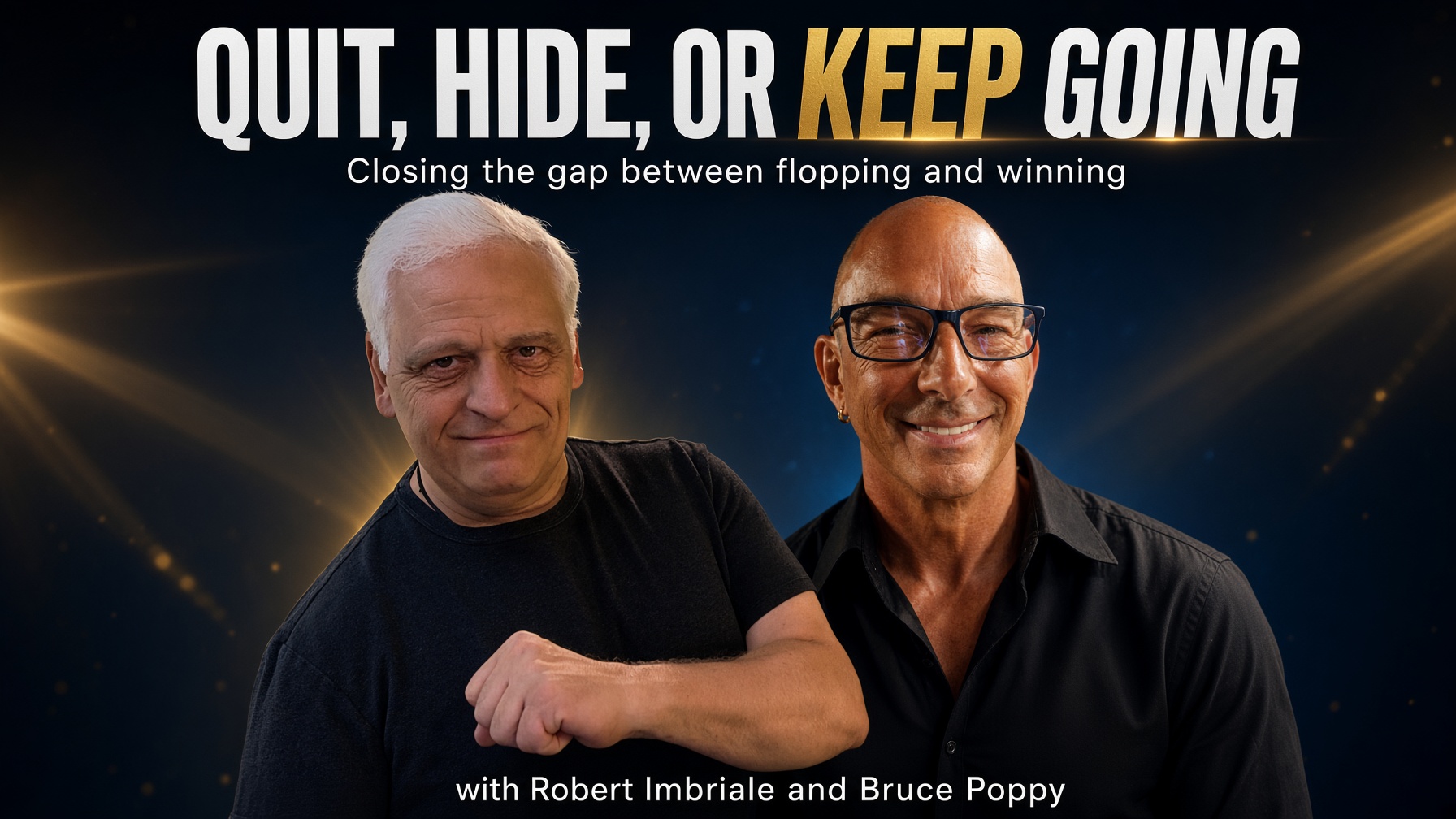
Watch or Listen to this episode now:
What to Do When Your Business Idea Fails: 3 Smart Moves
This week Nvidia agreed to buy Hugging Face – the platform people call “the GitHub of AI” – for a reported $12.9 billion. It is the kind of number that makes an entire company look like it was destined for greatness from day one.
It wasn’t.
Hugging Face started life as a chatbot app for teenagers. It stalled out around 100,000 users and stopped growing. By most measures, that was a flop. The founders had built the thing they cared about, and the thing they cared about had quietly run out of road.
So they did the one thing almost nobody does. They looked sideways.
One of the co-founders had put an open-source machine learning tool up on GitHub — an afterthought, a side project, not the business. It started getting attention. They noticed, and they rebuilt the entire company around the thing that was working instead of the thing they had planned.
That is the real story behind almost every overnight success, and it is exactly **what to do when your business idea fails**. On Episode 10 of Renegade Breakthroughs, I sat down with Bruce “Poppy” Feldman Jr. — creator of the Unleashing Excellence System — to break down the gap between a flop and a win, and why most people never make it across.
The Three Things People Actually Do When an Idea Flops
Watch enough entrepreneurs long enough and you see the same three responses every time.
**They quit.** The idea hits its first real obstacle and that’s the end of it. Not the second obstacle, not the tenth — the first. This is where the overwhelming majority land.
**They hide.** They’ll try again, but quietly, privately, telling nobody. They’re not done with the idea. They’re done being seen failing at it. The humiliation is the thing they’re actually avoiding.
**They keep going.** A small group refines, retools, tweaks, and keeps moving until something works. Not because they’re smarter or braver, but because they’ve built a different relationship with the word “failure.”
Most people reading this already know which one they are. The useful question isn’t which category you fall into — it’s how to become the third one on purpose.
Stop Making the Flop About You
Here’s the single biggest shift, and it’s the one Bruce hammered hardest.
A flopped idea is *information about the idea*. It is not a ruling on your worth.
We collapse those two things constantly. The launch didn’t sell, so I’m not smart enough. The offer didn’t land, so I’m a fraud. Once failure becomes part of your identity, you shrink back, you avoid, you procrastinate, and eventually you quit — not because the idea was bad, but because trying again now costs you something psychologically that you can’t afford.
Bruce puts it plainly: he doesn’t use the word failure at all. There’s a finality baked into it. His framing is that he either wins, or he figures out how something isn’t supposed to work. Same event, completely different consequence for the person it happened to.
The same trap shows up in how people value themselves financially. If your identity is welded to your bank balance, then a low balance means *you* are low. Break that connection and you’ll actually perform better, because you’re no longer defending your self-worth every time you take a risk.
If I tell you your idea is terrible, that doesn’t mean I don’t like you. But if you hear it as a verdict on you, you’ll never move again.
Define What Winning Actually Means First
A huge share of what people call failure is really a badly set expectation.
Every January, someone decides they’re going to get healthy. That’s it — that’s the goal. “Get healthy.” At the end of the month, they’ve lost seven pounds instead of the ten they vaguely had in mind, and they log it as a failure and stop.
Seven pounds is not a failure. Seven pounds is better than zero and dramatically better than gaining ten. But without a granular definition of winning, there’s no way to tell progress from defeat — so everything short of the fantasy gets filed as a loss.
Get specific about what winning looks like before you start. Then get specific about the smallest unit of progress that still counts.
Build Reps, Not Breakthroughs
Bruce’s answer to the paralysis is reps — the smallest possible action that moves you toward the thing you want.
You don’t join a gym on January 2nd and bench 300 pounds. You move a small weight, then a slightly bigger one. The reps build confidence, and the confidence funds the next rep. That compounding is the whole mechanism.
His practical framework is the **3×3**: three tiny reps in three areas of your life — health, business, relationships, whatever yours are — every single day. Non-negotiables. Write them out in advance. Do them. Repeat tomorrow. That’s the consistency chain.
What counts as a rep? A two-minute walk. One paragraph. Ten minutes with your phone face-down and your full attention on your spouse. That’s it. That’s the whole rep.
And there’s a hidden benefit to setting the bar that low. If you commit to writing one paragraph, you’ll often write ten pages — because the resistance was never about the work, it was about the size of the thing you were staring at. Lower the entry cost and you’ll routinely blow past it.
I run a version of this myself. Every day my task list has things on it I know I can finish, alongside the bigger items I’m chipping at. Finishing the day having accomplished something visible is not a vanity exercise. It’s momentum, and momentum is the fuel you’ll need on the days that go badly.
The Reset Day Rule
You are going to miss. Life happens, you’ll skip a rep, you’ll take a day off you didn’t plan.
Bruce’s rule handles it: **it’s okay to miss once. Never miss twice.**
Missing once is an event. Missing twice starts a story — *I always do this, I could never keep this up, I’m the kind of person who quits* — and that story is far more expensive than the missed rep. So you reset. You already know what the rep is. Go do it at the next opportunity and skip the self-flagellation entirely.
How to Tell “Keep Pushing” from “Beating a Dead Horse”
This is the hardest question in the whole conversation, and it deserves an honest answer rather than a motivational one.
The signal I trust most is force versus flow. When you’re forcing it — white-knuckling, stressed, reaching for a bigger hammer to drive a square peg into a round hole — that’s usually information. When things start moving easily and doors open without you kicking them, you’re pointed the right way.
But notice the third option, the one Hugging Face took: it’s often not that the idea was flawed. Sometimes the square hole is half an inch to the left. The pivot isn’t abandonment, it’s aim.
What makes this possible is shortening the distance between doing and reflecting. A ship a fraction of a degree off course is fine at first and catastrophically wrong a thousand miles later. Review daily on the small things, weekly on the big ones, and correct early while the corrections are still cheap.
You Cannot Do This Alone
The biggest lesson of my last thirty years is that nobody gets there by themselves.
When you’re inside your own idea, you can’t see it. You need people who will look at the failed launch and ask what happened, break down the numbers, find the actual broken step — instead of confirming that you’re a failure. That’s what a good mastermind does, and it’s why people who have one move faster.
Choose those people carefully. Friends and family are often the worst possible sounding board, and usually out of love — they don’t want to see you hurt, so they’ll talk you out of the risk. Others will discourage you because your success would hold up a mirror to their own inaction. Be deliberate about who gets to weigh in.
One modern addition: AI makes a surprisingly good brainstorming partner. When I’ve built a page I think is finished, I’ll hand it to an AI and ask how to make it better. It doesn’t tell me I’m a failure. It gives me options. That’s the exact function a mastermind serves, available at 2am.
The Takeaway
Failure is only final if you quit. Everything else is data.
Separate the result from your identity. Define what winning means before you start. Shrink the work down to reps small enough that you’ll actually do them. Never miss twice. Review often enough to correct early. And put people around you who will help you look sideways at the thing that’s quietly working.
As Bruce says: no matter how you feel today, get up, get dressed, show up, be strong, and keep going.
Nvidia just paid $12.9 billion for a company that started as a failed teenage chatbot app. Your flop might be information, not a verdict.
**Get Bruce’s free framework:** Bruce has released *The Forge* — the third pillar of his Unleashing Excellence System, where identity and beliefs get tested — as a free ebook, including the full 3×3 framework and the reset day rule. No upsell, no strings. Grab it at https://forge.brucepoppy.com
Download This FREE Library AI Prompts that can save you 10 or more hours per week!
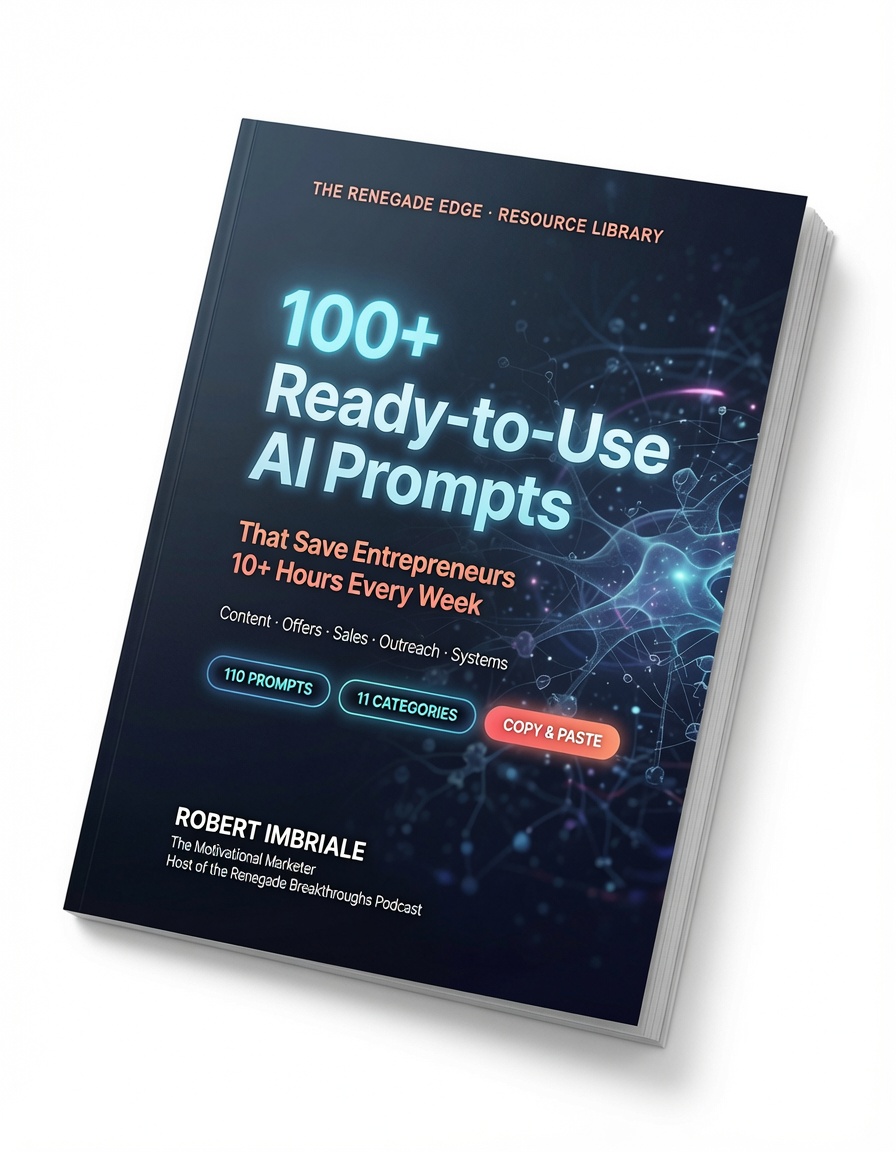
This is for you if you’re an entrepreneur, coach, consultant, or creator who:
– Wears too many hats and never has enough hours in the day
– Knows AI *should* be saving you time but hasn’t cracked how
– Would rather spend your energy on the work only you can do – not on writing every email, caption, and offer from scratch
If that’s you, this library was built for exactly where you are right now!
Free instant access. No credit card, no catch.
The post What to Do When Your Business Idea Fails: 3 Smart Moves appeared first on Robert Imbriale.